Why Invest in Automated Packaging?
The use of automated packaging machinery is becoming more and more common as technology continues to progress. Though the industry is growing, some companies find themselves questioning the use of automated machines on the assembly line. What advantages do automated machines have over traditional workers? Automated machines come with a great deal of advantages over traditional packaging means. They are able to produce packages more efficiently in nearly every way. Without human error, automated machines are able to produce more packages than an average employee, and with far more accuracy than is humanly possible.
According to the Packaging Machinery Manufacturers Institute (PMMI), manufacturers who invest in automated packaging see an average 20–30% increase in throughput and significant reductions in labor costs. Though automated packaging machinery can provide a large number of benefits, your operation will only improve depending on which machine you opt to purchase. Some of the most commonly used machines are listed below. You can also explore our full range of packaging automation solutions to find the right fit for your facility.
Pallet Wrappers
Pallet wrappers do exactly as their name implies — they wrap packaged pallets to prepare them for bulk shipping. Typically, wrapping a pallet may be a multi-person, fairly tedious task that would take a bit of time, even for experienced workers. A pallet wrapper, however, will wrap pallets exactly the same way every time, all while making very few to no mistakes. Because this machine also requires very little assistance from human employees, it is able to complete its job with ease. Learn more about best practices in our guide to proper pallet wrapping.
Case Erectors
Case erectors are used to create boxes to put products in. A packaging operation without a case erector would run very slowly compared to one with a case erector. A case erector eliminates the need for having workers spend hours and hours erecting packages when they could be performing different jobs. It also, like all of these other machines, eliminates the possibility of human error, which is very important for saving company resources in the long run. Every box that is mistakenly put together by a worker will cost the company, even if just a little. A case erector eliminates this extra cost. Morrisette offers dedicated case erection and conveyor automation to keep your line moving.
Case Sealers
Case sealers are machines that seal boxes to prepare them for shipping. Though it may seem like a simple task, sealing cases can take up a lot of time in a high-volume packaging operation. A case sealer will seal cases quickly and consistently, eliminating the need for workers to spend time on this repetitive task. Like all packaging automation equipment, case sealers also reduce the risk of human error. If you want to understand common sealing challenges, check out our packaging tape diagnostics guide.
Stretch Wrappers
Stretch wrappers differ slightly from pallet wrappers in that they are used to wrap products in stretch film, rather than shrink film. A stretch wrapper will wrap a product in stretch film, which will then keep the product secure during shipping. These machines are most commonly used to wrap pallets, but they can be used to wrap any product that needs to be secured. For a deeper dive, explore our stretch film guide and learn about stretch wrap containment force — a critical factor in load stability. For a real-world example of automatic stretch wrapping in a demanding environment, read about how Morrisette installed the Lantech LeanWrap at BD.
Robotic Palletizers
Robotic palletizers use robotic arms to stack products onto pallets for shipping. These machines are ideal for high-volume operations that require consistent, efficient palletizing. They can handle a wide variety of products and can be programmed to stack pallets in a number of different configurations. Morrisette offers advanced robotic palletizing solutions that integrate seamlessly into existing packaging lines. The Robotic Industries Association reports that robotic palletizing can reduce palletizing labor costs by up to 75%.
Accumulators
Accumulators account for a fairly niche job in a packaging operation. They typically are at the end of a packaging operation, and are a space where finished, packaged products can be placed, where they will then be rotated while awaiting to be packaged for shipping. Accumulators can come in all different forms, and some of them do extra jobs. However, these machines are primarily for conserving space in a warehouse. Accumulators perform a job that may seem small but can really make a difference in a very busy space. To see how Morrisette has helped companies manage output more efficiently, explore our customer success stories.
Conveyors
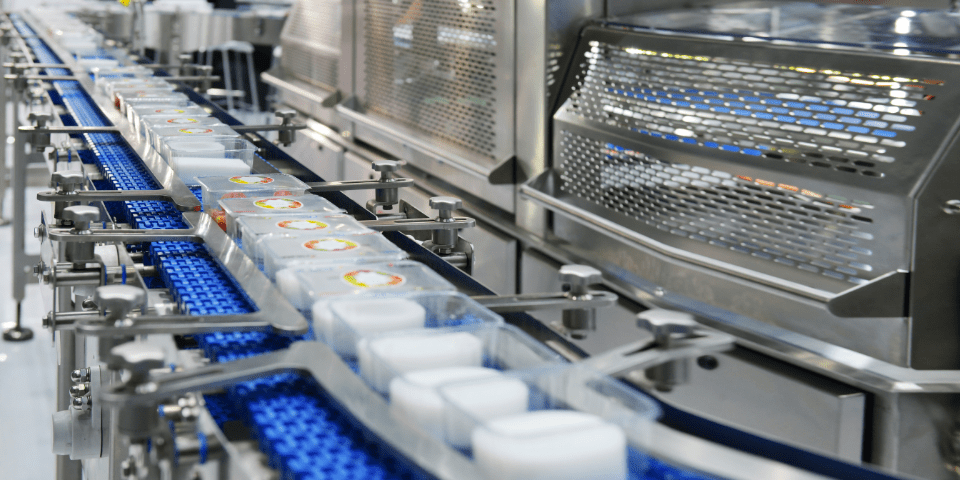
Conveyors and conveyor belts have been in use for a long time, and they’ve only improved since their conception. A conveyor operated by skillful workers can ramp up production to extremely high levels. Conveyors allow for products to be streamlined to a shipping location while being worked on and packaged along the way. These machines have been essential in fast-paced packaging operations for years. With a good conveyor line in place, any packaging operation can run much faster than it can without it. Morrisette’s case erection and conveyor systems are designed to integrate with your full packaging line.
Labeler
Labeler machines are used to put labels on products or packages. Whether it’s labels on a food or beverage product, or shipping labels, a labeler can provide a number of services to a packaging operation, and just like every other machine, save time and money. Labels will always be put on straight and centered when done with a labeler. Also, shipping labels will be printed and placed properly to ensure that the shipping process goes over a little easier. For businesses exploring digital printing and labeling options, see our digital printing services.
Sealers
Sealers are machines that seal off any filled packages. Any time a box is filled with a given product, a sealer will be used to seal it shut, thus preparing it for shipping. Automating the sealing process is something that may not seem that important, but when it comes to large-scale products, or high-volume output warehouses, sealers can save a lot of time and money. A simple but important job — and one that pairs well with a complete end-to-end automation solution.
Filling Machines
Filling machines are pieces of automated machinery that are used to fill containers. Basically, this machine is used to pour the right amount of liquid, or a material that is gel-like, into a given container each time it is used. It will pour a consistent amount of liquid into each container, ensuring that your products are all packaged equally. Though this product sees the most use in the food and beverage packaging industry, it can be used in a wide variety of settings. This ensures that your operation will not waste resources on materials, and will allow your operation to run more efficiently.
Capping Machines
Capping machines are used in packaging operations that involve products that need to be capped after being packaged. This can refer to bottled items, or other products that require caps. Though this machine is a little more niche than some of the others on this list, if you have a business that deals in the food and beverage industry, then a capping machine may be a worthy investment. A capping machine will put caps on tightly and securely to ensure that they don’t become loose during transit. It’s also much faster than doing it manually, which can increase efficiency and decrease labor cost.
Lidding Machine
A lidding machine does the same thing as a capping machine except for products that require lids. Used broadly in the temperature control industry, it can also be used in a wide variety of circumstances. Even as a niche product, this machine can still provide a lot of value to any operation that needs to put large quantities of lids on their products. A lidding machine can save an operation a lot of time and money as well.
Why Partner with Morrisette for Package Automation?
As you can see, packaging automation is extremely important for running a successful business in the modern age. Automated machines provide a more efficient output of packaged products that are unmatched by a traditional workforce. However, it is important to note that not every machine on this list is necessary for your operation. With our packaging automation solutions, we don’t just provide a stock of automated machinery — we also provide a service that will establish where exactly your operation needs help the most.
With our in-house team of engineers and automation experts, we welcome the opportunity to talk with you about how to make your supply chain more efficient and cost-effective. We can help you decide which machines will help you the most and develop a plan to implement them into your operation. Our automation service and support team is also available after installation to keep your equipment running at peak performance.
We pride ourselves on our ability to provide open and honest communication throughout the entire process. If you want to see how automation has helped companies like yours, read about how automation fills the gap and increases production on the packaging line.
If you’re in need of automated packaging machinery, contact us today.
Frequently Asked Questions About Packaging Automation Equipment
What is packaging automation equipment?
Packaging automation equipment refers to machinery designed to perform packaging tasks — such as filling, sealing, labeling, wrapping, and palletizing — with minimal human intervention. Common examples include pallet wrappers, case erectors, conveyors, filling machines, robotic palletizers, and labelers. These machines increase speed, consistency, and output while reducing labor costs and the risk of human error. Learn more about automated packaging equipment from Morrisette.
What are the main benefits of automating your packaging line?
The key benefits of packaging automation include increased throughput, reduced labor costs, improved consistency and accuracy, lower rates of product damage, and the ability to scale production without proportional increases in headcount. Automation also helps address labor shortages — a challenge many manufacturers face today. For more on this topic, see our post on how to stay ahead of the labor shortage through smart automation investments.
How do I know which packaging automation equipment is right for my operation?
The right equipment depends on your product type, production volume, packaging format, and facility layout. A packaging automation specialist can audit your current line to identify bottlenecks and recommend the machines that will deliver the greatest ROI. Morrisette’s team of engineers offers this assessment as part of our packaging automation solutions process. You can also contact us directly to schedule a consultation.
What is the ROI of packaging automation?
ROI for packaging automation varies by machine type, production volume, and current labor costs, but many operations see full payback within 12–36 months. Robotic palletizers, for example, can reduce palletizing labor costs by up to 75%, while automated pallet wrappers often pay for themselves in stretch film savings alone. Morrisette works with clients to calculate projected ROI before recommending any equipment. See how we’ve helped other businesses in our success stories.
Can packaging automation equipment be integrated with existing lines?
Yes. Most modern packaging automation equipment is designed to integrate with existing production lines. Conveyors, case erectors, and labelers, for example, can typically be added to a current line with minimal disruption. Morrisette’s engineering team handles installation planning and integration to ensure a smooth transition. Our automation service and support team provides ongoing technical assistance after installation.
Is packaging automation suitable for small and mid-sized businesses?
Absolutely. While large manufacturers have long used automation, modern equipment has become increasingly accessible and scalable for small and mid-sized businesses. Even a single piece of equipment — like an automated case sealer or a pallet wrapper — can deliver measurable improvements in efficiency and labor savings. Morrisette helps businesses of all sizes determine which automation investments make the most sense for their current operation and growth trajectory. Read about what you need to know about packaging automation to get started.
Does Morrisette provide service and support after installing automation equipment?
Yes. Morrisette provides dedicated automation service and support after every installation. Our in-house team of engineers is available to help with maintenance, troubleshooting, and upgrades to ensure your equipment continues to perform at its best. We pride ourselves on being a long-term partner, not just a one-time equipment vendor.