
You order something online. Three days later, a box shows up dented on one corner, taped in a way that makes you suspicious, and about four sizes too big for the lip balm rattling around inside it. Now you have an impression of the seller. Whether they deserve it or not, you see the seller as cheap, careless and probably not in business this time next year.
Now flip it. You’re the one selling. And nobody taught you this part.
You built the product. You built the website. Then you got your first order and realized you have no idea what to ship it in. Welcome to ecommerce packaging, the part of the business nobody talks about until it’s costing them money and their reputation.
What is Ecommerce Packaging?
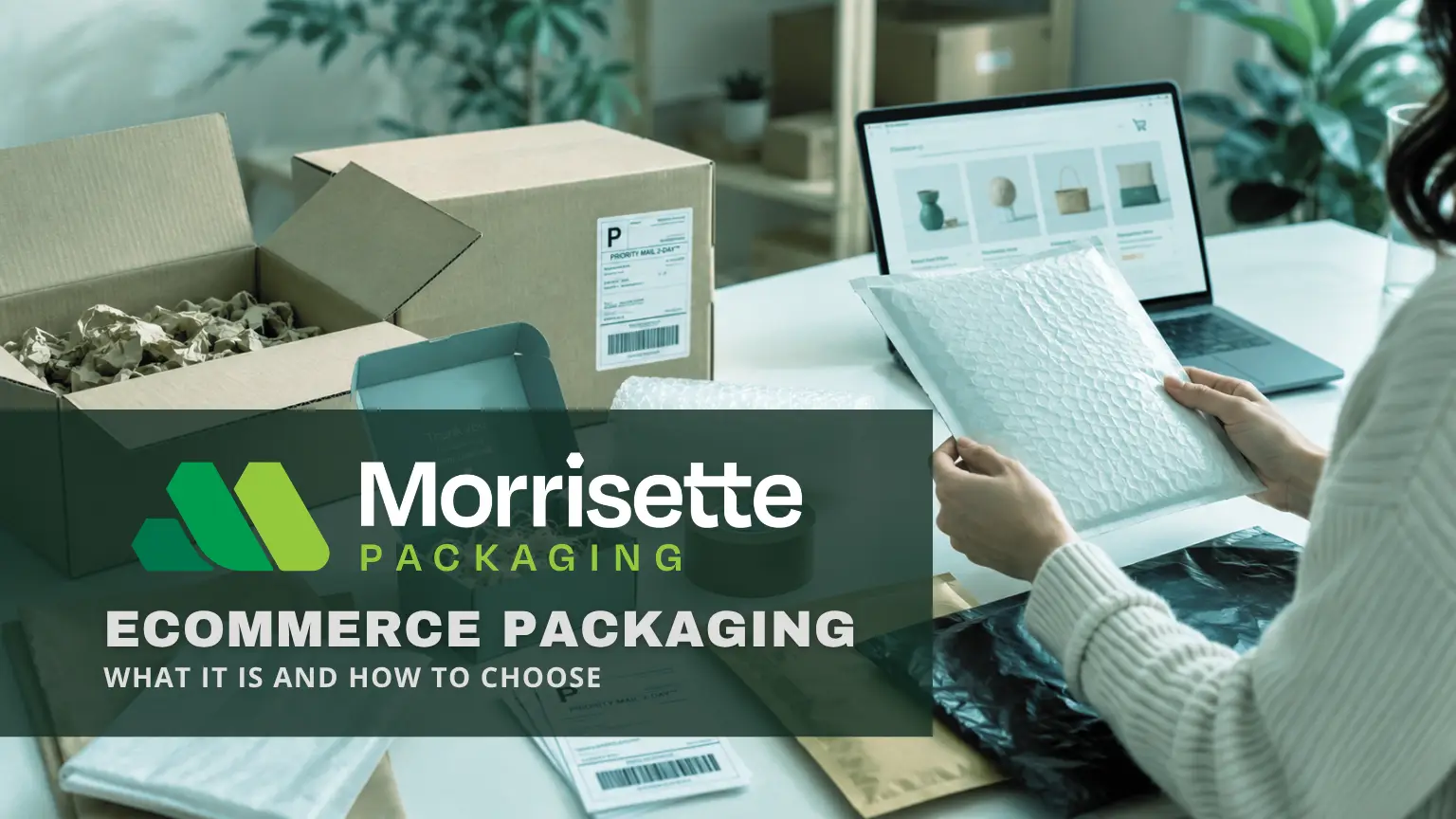
Ecommerce packaging is any material used to pack, protect, and ship a product ordered online: the box or mailer itself, plus whatever goes inside it to keep the product safe and looking good when it arrives.
But the job it does is bigger than the definition suggests.
Every ecommerce package has to do three things at once: protect the product through a trip it can’t control, control the cost of getting there, and represent the brand to a customer who’s judging the whole company by a cardboard box on their porch.
Wholesale packaging only has to survive a forklift and a pallet. Ecommerce packaging survives a conveyor belt, a delivery van, a dog, and a doorstep: one box, one item, zero margin for error.
If you’re new to packaging in general, it helps to have a place to look up terms as they come up.
We built a Packaging Glossary for exactly that reason. Clear communication beats guessing every time.
Why the Same Box Won't Work for Everything
One of the easiest traps to fall into is the idea that you can pick one box and ship everything in it.
It sounds nice. Multiple SKUs, one box. Easy.
But the easy way can become the hard way real quick.
A candle and a phone case do not ship the same way.
A candle needs cushioning against drops. A phone case in a box built for a candle is just wasted cardboard, wasted freight cost, and a customer opening a box that’s mostly empty air.
Here’s the honest breakdown of what’s actually out there, and when each one earns its keep:
Poly mailers. Lightweight, flexible plastic bags for soft or non-fragile goods: apparel, soft goods, anything that can survive getting bent. Cheap to ship, cheap to store, wrong choice for anything with corners or glass.
Padded or bubble mailers. Same idea as a poly mailer with cushioning built in. Good for small electronics, jewelry, cosmetics: things that need a little forgiveness but not a full box.
Corrugated shipping boxes. The workhorse. Fluted cardboard that handles weight, stacking, and the general abuse of a shipping network. This is where fragile items, multi-item orders, and anything heavier than a few pounds belong.
Mailer boxes (folding cartons with a lid). A step up from a plain shipping box: sturdier than a mailer bag, better looking than a shipping box, and usually the choice for direct-to-consumer brands that want the unboxing to feel like part of the product.
Inserts. Tissue paper, custom dividers, foam, molded pulp, whatever keeps a product from sliding around inside its box and turns opening the package into a small moment instead of a shrug.
None of these is the “right” one. The right one depends on what you’re shipping, how far it’s going, and what you want the customer to feel when they see it, touch it and open it up.
The Real Cost of Bad Ecommerce Packaging
Undersized packaging leads to damage claims. Oversized packaging leads to dimensional weight charges. Carriers now bill based on box size, not just actual weight, so a box that’s mostly empty space is a box you’re paying to ship air in. Both mistakes cost money, but oversizing is the one nobody notices until they add it up over a year of orders.
The fix isn’t complicated: match the box to the product. A void-fill calculation, a quick look at your top five SKUs, and an honest measurement of what you’re actually shipping will save more money than almost any other decision a growing ecommerce operation makes in its first year. This is also where a lot of sellers realize packaging isn’t just a shipping department problem. It’s a custom design problem, because the right box size and structure has to be figured out once, correctly, not re-guessed on every order.
Packaging is a First Impression
It’s obvious once you think about it.
Packaging is marketing whether you plan for it or not.
A plain brown box says one thing. A branded mailer box with your logo, your colors, and a thoughtfully placed insert says something else entirely, and customers notice the difference enough to make entire YouTube channels dedicated solely to the unboxing experience.
You don’t need to go all in on day one. But it’s worth knowing what’s possible. Morrisette Packaging’s Greensboro headquarters brought on a Koenig & Bauer Celmacch – ChromaCUT 8-color rotary die cutter in North America – a Xeikon Idera, the kind of equipment that makes high-graphics, retail-quality printed corrugated packaging realistic even for brands that aren’t shipping a million units a month.
If branding your packaging is part of the plan, it’s worth exploring what’s actually achievable before assuming it’s out of reach.
Take a look at our Packaging Products and Manufacturing Solutions to see the range.
The Test That Doesn't Care How Good Your Box Looks
We have an in-house ISTA validation process.
Why should you care?
ISTA is the International Safe Transit Association.
For an ecommerce brand, ISTA-tested/certified packaging is essentially evidence that the package has been engineered for the abuse of ecommerce distribution. Not just designed to look good.
That matters because ecommerce is a rough environment. A package may move through fulfillment centers, conveyor systems, trucks, sorting equipment, parcel carriers and multiple manual handling points before it reaches the customer’s porch. ISTA has test protocols specifically designed to simulate those hazards.
ISTA testing doesn’t care how good your packaging looks. It drops the box from a height, vibrates it for hours like the back of a delivery van, and stacks weight on top until something gives, then tells you exactly what failed.
For many sellers, that’s where the real cost shows up. A crushed corner or a flap that didn’t hold means a redesign, a new sample, and another shipment out to a testing lab. It’s common to run that cycle three or four times, paying for a new round of testing after every change, before a package finally earns certification.
For the brand, there are several big reasons to care:
- Fewer damaged products. Testing can expose weaknesses involving drops, vibration, compression and handling before thousands of packages enter the real distribution network.
- Fewer returns, replacements and refunds. Every damaged shipment can mean another product, another box, another freight charge and potentially a lost customer. ISTA testing gives the company a way to engineer those failures out of the system.
- Better customer experience. Ecommerce packaging is one of the few physical interactions a customer has with an online brand. A crushed box or broken product can undermine everything the marketing team did to win that customer.
- Confidence when reducing packaging. This is a big one. Testing doesn’t necessarily mean more packaging. It can help engineers determine whether they can use a smaller box, less cushioning or a different material without increasing damage risk. ISTA’s Responsible Packaging by Design framework specifically incorporates testing into evaluating responsible packaging alternatives.
- Evidence instead of guesswork. Rather than saying, “We think this box should survive UPS/FedEx/Amazon distribution,” the company can point to standardized laboratory testing that represents actual distribution hazards.
- Retailer and marketplace requirements. Some distribution channels have their own ISTA protocols. ISTA currently lists retailer-specific procedures including 6-Amazon.com and 6-Sam’s Club, for example. This furthers our ability to help you get into the club stores you be aiming for.
- Stronger position in shipping-damage disputes. ISTA says its Transit Tested certification provides third-party documentation of packaged-product performance. It doesn’t guarantee a carrier claim will be paid, but ISTA specifically notes that the independent testing can put a shipper in a stronger position during disputes.
Having our own ISTA validation lab means we can adjust a design and test it again the same day instead of waiting weeks for an outside lab’s calendar. Fewer rounds, fewer surprises, and packaging that’s ready the first time, not the fourth.
Choosing Packaging When You're Growing Fast
If you’re past the stage of hand-packing every order at your kitchen table, packaging starts intersecting with everything else: inventory, labor, storage space, and how fast you can actually get orders out the door. This is usually where sellers first hear the term kitting: pre-assembling products, inserts, and packaging together ahead of time so fulfillment is faster and more consistent.
We would love to learn more about you, your goals and what we can do to help make every day better. Click here to schedule a time for a free coffee and consultation at your location with one of our Packaging Specialists.
If order volume is starting to outpace your team’s ability to pack boxes by hand, it’s worth a look at Kitting & Fulfillment and Automation Solutions, not because every seller needs automation on day one, but because knowing the ceiling exists changes how you plan for growth instead of getting surprised by it.
Sustainability is a Factor
Sustainable packaging can be cost-effective.
Right-sized boxes use less material and cost less to ship.
Recyclable corrugated, paper-based void fill, and mailers sized to the product hit both goals at once.
It’s worth a look at Sustainability if this is a factor customers are asking you about, and increasingly, they are.
Where to Go From Here
Ecommerce packaging isn’t complicated once you know what question you’re actually answering: what does this product need to survive the trip, and what do I want the customer to feel when it arrives? Everything else, mailer or box, plain or printed, hand-packed or kitted, flows from those two questions.
You don’t have to figure it out alone, and you definitely don’t have to guess. From Design to Delivery® isn’t just a tagline. It’s the actual order of operations, and packaging decisions made early save money and headaches for years after.
We would love to learn more about you, your goals and what we can do to help make every day better. Click here to schedule a time for a free coffee and consultation at your location with one of our Packaging Specialists.
Frequently Asked Questions
What is ecommerce packaging? Ecommerce packaging is the materials used to pack, protect, and ship products ordered online, including boxes, mailers, and any inserts or cushioning used inside them.
What’s the best packaging for a small ecommerce business just starting out? For most new sellers, a mix of poly mailers for soft goods and correctly sized corrugated boxes for anything fragile or heavier covers the majority of orders. The key is measuring your actual products rather than guessing.
Does ecommerce packaging need to be branded? No, but it helps. Branded packaging isn’t required to ship a product safely. It’s a marketing decision, not a shipping requirement. Many sellers start with plain packaging and add branding as volume grows.
How do I reduce ecommerce shipping costs through packaging? Right-sizing your boxes is the single biggest lever. Oversized packaging costs more in dimensional weight charges and void-fill material, even when the product weighs the same.
Is sustainable ecommerce packaging more expensive? Not usually. Sustainable choices like recyclable corrugated and right-sized mailers typically cost less, not more, because they use less material overall.